
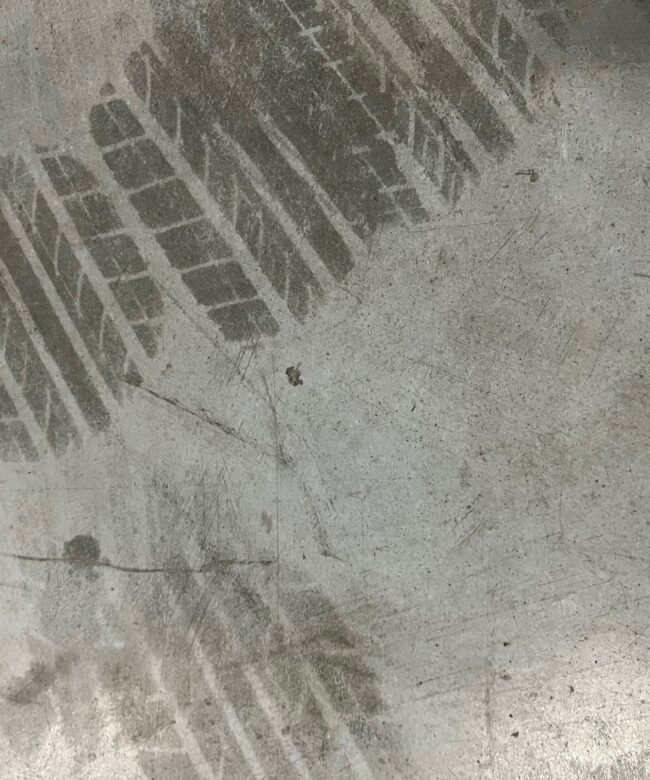
Tire marks are visible streaks or impressions on a floor caused by vehicles or wheeled equipment such as forklifts, mobile scaffolding, and transport carts. These marks are often the result of rubber or polyurethane (PU) tires releasing plasticizers or dirt onto the floor surface.
New concrete, epoxy, and PU floors are particularly susceptible, as the top layer is often not yet fully cured or adequately protected.
Tire marks are caused by:
This can result in:
In addition to tire marks, other types of floor damage frequently occur during construction and installation activities.
Scratches and Abrasion Marks
Caused by:
Discoloration and Stains
Caused by:
👉 This is why timely floor protection is essential to prevent tire marks and other forms of damage.
As is often the case in construction and industrial environments, prevention is better than cure. There are several ways to limit tire marks and floor damage, but not every solution is practical or cost-effective.
A commonly used solution is equipping machines with non-marking tires. These tires do not leave black marks and reduce the risk of floor discoloration.
In practice, however, non-marking tires also have several disadvantages:
In addition, these costs are difficult to pass on to the client, particularly for temporary projects.
For small-scale projects, drive-over panels are sometimes used to protect the floor. This method can be effective when applied correctly.
Key considerations include:
As a result, this solution is labor-intensive and inefficient. For larger projects or high traffic volumes, it is often not a practical option.
The fastest and most effective solution is the use of tire covers from TireSocks Inc. These covers create a protective barrier between the tire and the floor, preventing tire marks, scratches, and contamination.
Key benefits include:
Different versions are available for:
For smaller wheels—such as those on trolleys, carts, and trailers—a cover combined with a Velcro fastening system is used.
A unique product in the range is TrackSocks, specifically developed for rubber tracks—an application for which very few alternatives exist.
In many cases, these tire covers can be directly charged to the client, as they have a clear interest in the floor being delivered damage-free and in a presentable condition.
If none of the above solutions are used, there is a significant risk that the floor will require full cleaning or even repair. The associated costs vary widely and depend on:
Even in smaller projects, it often proves more cost-effective to invest in preventive solutions—such as non-marking tires, protective panels, or tire covers—than to incur the expense of intensive floor cleaning or repairs afterward.
👉 Preventive floor protection saves time, money, and disputes after project completion.
There are two ways to determine the correct TireSocks for your tires.
1.Read the tire size from the sidewall. Many tire sizes are listed in our system and can be provided to you directly.
2. Measure the diameter and the width of the tire, as shown below.
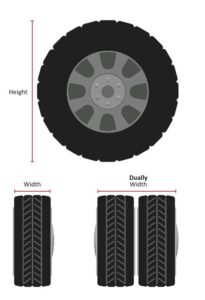
Please note: for dual tires, measure the total width of both tires, including the space between them.
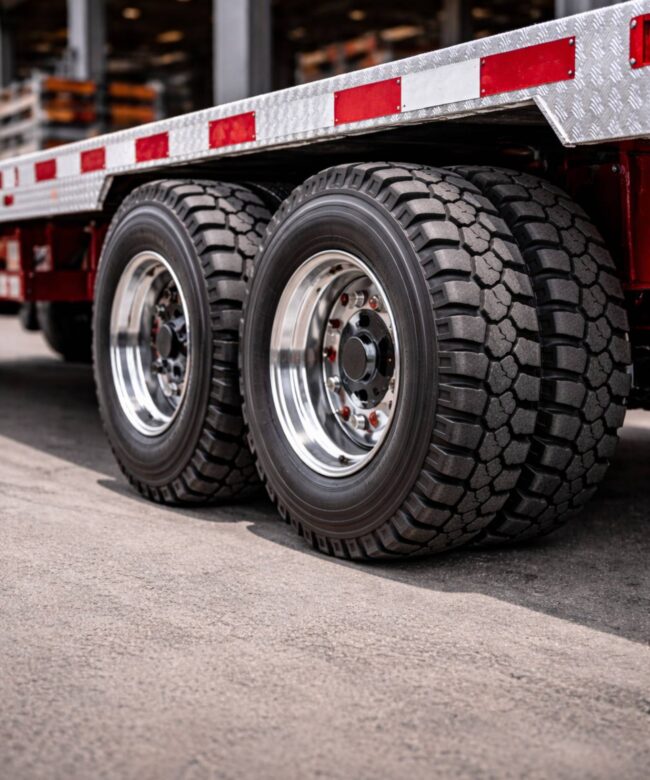
Tire covers—also referred to as wheel covers—create a protective barrier between the tire and the floor. They are effective immediately after installation and prevent tire marks, scratches, and contamination when working on sensitive floor surfaces.
Depending on site conditions, tire covers typically have an average service life ranging from two weeks to two months. The exact lifespan depends on several factors, including:
Installing tire covers is quick and straightforward. The process consists of the following steps:
Pull the upper half (½) of the tire cover over each tire.
Ensure that the cover overlaps only 2 to 5 cm at the rear of the tire (see photo).
Start the machine and carefully drive forward so the tires rotate 180 degrees.
Pull the remaining half (½) of each tire cover over the tires to complete the installation.
Once these steps are completed, the tire covers are immediately ready for use, allowing work to continue safely without the risk of floor damage.
⚠️ Important:
The machine must be completely switched OFF during every step of both installation and removal of the tire covers.
The ignition key must also be removed from the machine at all times.
Failure to follow these safety instructions may result in personal injury or equipment damage.
To maximize the lifespan of the tire covers and prevent damage to both the floor and the machine, the following points should be observed:
Removing the Tire Covers
Fully pull the upper part of the cover off each tire and then carefully drive the machine forward.
Correct Positioning
Ensure that no part of the red center section comes into contact with the tire tread.
Never drive on the seam of the tire cover.
Intended Use
Tire covers are designed for indoor projects only and must be used exclusively on flat, even surfaces.
Extending Service Life
Tire covers last significantly longer when:
By following these guidelines, you maximize the return on investment and ensure optimal floor protection throughout the project.
An additional way to significantly extend the lifespan of tire covers is by using Heavy-Duty Tire Covers from TireSocks Inc..
Heavy-Duty Tire Covers feature:
This version is specifically developed for situations where standard tire covers wear out more quickly.
The Heavy-Duty version is recommended:
By choosing Heavy-Duty Tire Covers, you reduce the number of replacements, minimize downtime, and ensure consistent floor protection throughout the entire project.
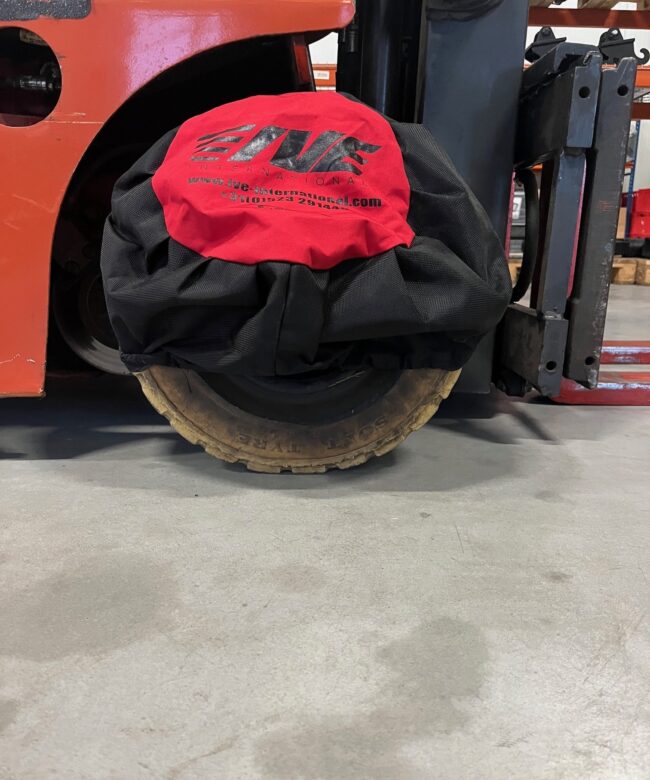
Heavy-Duty TireSocks feature an additional reinforced fabric layer and a reinforced seam patch. This typically results in up to twice the service life compared to standard TireSocks.
The difference in thickness between a standard set and a Heavy-Duty set can be clearly seen in the adjacent photo.
No. TireSocks are designed exclusively for indoor use on flat, even surfaces.
Use outdoors or on rough concrete is not recommended, as this significantly reduces their lifespan.
On average, TireSocks last between two weeks and two months. Their lifespan depends on factors such as:
the type of machine
the load applied
the floor surface
intensity of use
Tips to extend service life:
Keep the machine moving while steering
Remove TireSocks when driving over rough or outdoor surfaces
TireSocks are equipped with a water-repellent top layer, but they are not fully waterproof and are not suitable for wet conditions or outdoor environments.
Did you know that TireSocks can be printed with your company logo?
This is available from just one set of four pieces and is completely free of charge. It allows you to combine effective floor protection with a professional appearance on site.
Upon request, we provide a comprehensive analysis of your machine fleet. For each machine, we clearly identify:
This ensures optimal protection without unnecessary costs.
Speed can be critical during active projects. That’s why we are always reachable by phone, email, and WhatsApp to answer urgent questions and help identify the right solution immediately.
Our most popular models are available directly from stock, allowing you to respond quickly and avoid delays in your operations.
TireSocks – the most widely used tire covers
CasterSocks – wheel covers for smaller wheels
TrackSocks – specialized covers for rubber tracks from TireSocks Inc.
Ready to protect your floors? Explore our non-marking tire covers for forklifts and lifts and find the right fit for your machines.
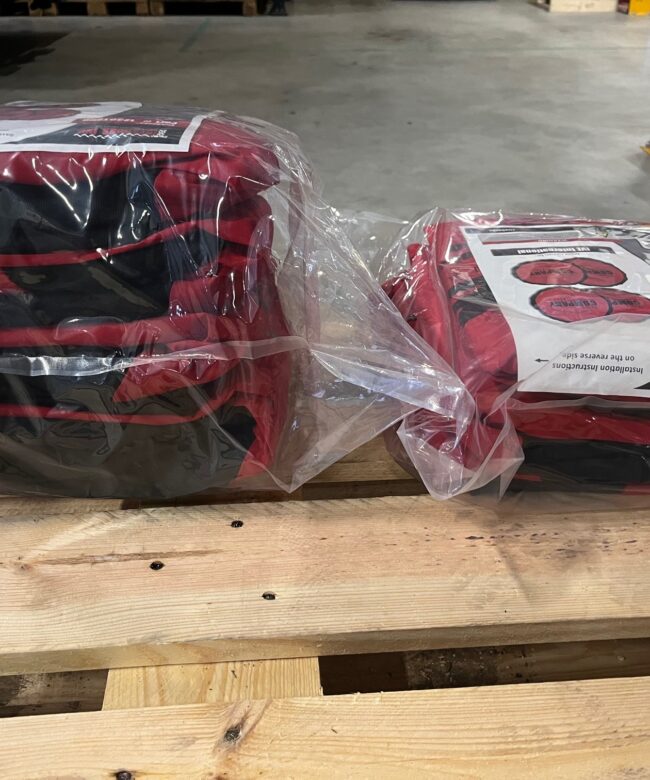
Tire marks and floor damage pose a significant risk during work on newly installed concrete and epoxy floors. Repairs are often costly and can lead to delays and unnecessary disputes with clients. For this reason, preventive floor protection is always the most sensible choice.
While solutions such as non-marking tires or drive-over panels may be suitable in certain situations, they often involve high costs, additional labor, or practical limitations. Tire covers such as TireSocks offer an efficient, flexible, and cost-conscious solution that can be deployed immediately and is easy to pass on to the client as a project cost.
By choosing the right tire covers—optionally in a Heavy-Duty version—you not only protect the floor, but also safeguard your project planning, budget, and professional reputation. After all, prevention is always better than cure.
This article was written by Thomas Jansen, who has more than five years of experience advising on and implementing TireSocks solutions.
As the owner of IVE International, he advises contractors, installers, and industrial clients on a daily basis on preventing tire marks and floor damage during projects.